What College Softball Coaches Actually Evaluate

College softball coaches are recruiting an athlete and a teammate. Your ability matters, and so do your attitude, work ethic, and willingness to learn. A talented softball player who’s difficult to work with or treats teammates poorly can lose an opportunity to someone who works harder and brings a better attitude.
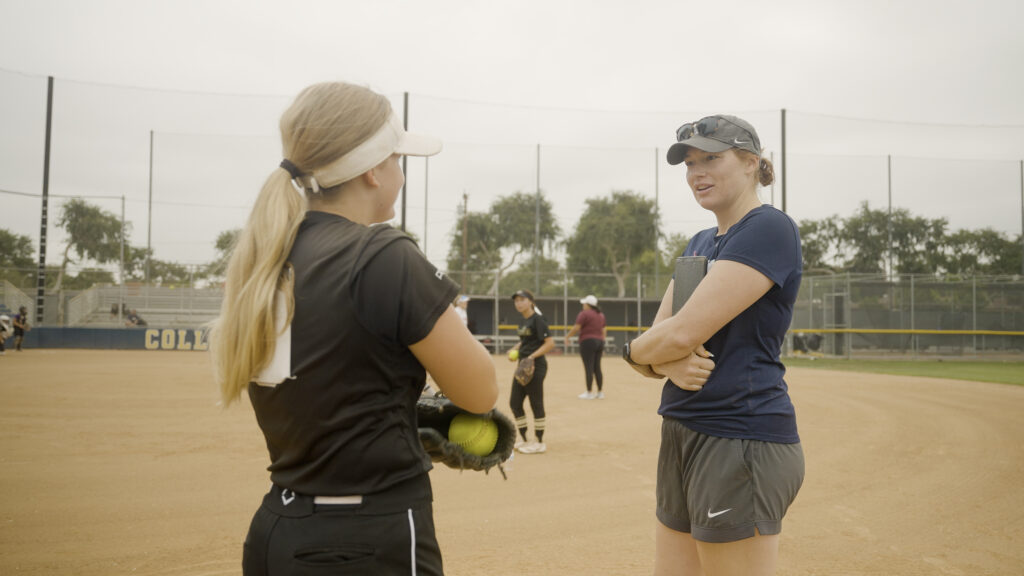
Coaches learn about who you are through conversations—they’ll get feedback from your coaches, personality assessments from your teachers, and see how you carry yourself during games and practices. They pay attention to how you respond to corrections, handle mistakes, and support teammates when you’re having a difficult day.
Alongside that, coaches evaluate your softball skills, your understanding of the game, and your potential to develop. This article explains how those pieces come together, including what coaches look for in pitchers and position players and how measurables help them assess your abilities.
How college softball coaches use measurables
Measurables give coaches in college softball recruiting a way to assess your physical skills and follow your progress. Pitching velocity can show how much speed you generate, exit velocity helps indicate your power at the plate, and running times help coaches evaluate your speed. Together with film and game evaluations, those numbers help a staff understand your strengths and where you can improve.
Here are the most common measurables used in softball:
- Pitching velocity. Often just called velocity or velo, this is the speed of each pitch you throw. Coaches look at your fastball velocity and the differences in speed between pitches to understand how you can disrupt a hitter’s timing.
- Spin rate. How quickly a pitch rotates. Coaches consider it alongside spin direction and movement to understand how the pitch behaves as it approaches the hitter.
- Exit velocity. How fast the ball leaves your bat after contact. It helps coaches assess your ability to hit the ball hard, while game footage shows how consistently you do it against live pitching.
- Throwing velocity. The speed of your defensive throws. Coaches evaluate your arm strength alongside your accuracy and how quickly you field and release the ball.
- Pop time. The time from a pitch reaching the catcher’s glove to the throw reaching a fielder’s glove, usually at second base. A quick transfer and strong, accurate throw help a catcher challenge runners attempting to steal.
- Home-to-first time. How quickly you get from the batter’s box to first base. It helps coaches assess your ability to beat out ground balls, bunts, and slaps.
- Home-to-home time. How quickly you circle the bases. It shows your speed and how efficiently you round each base.
- 60-yard time. A measure of straight-line sprint speed. Some coaches request it, though shorter running tests relate more closely to the distances you cover in softball.
When sharing results, include when and how they were measured. For exit velocity, note whether you hit off a tee, front toss, or live pitching. For running times, identify whether a stopwatch or electronic timer was used. Those details help coaches make useful comparisons and recognize your progress.
You don’t need to chase every metric. Start with the measurements relevant to your position and requested by the programs you’re pursuing. Your coaches can help you interpret the results and use them to set specific goals for your training.
How pitchers get evaluated
Coaches look at how you combine speed, movement, and location to challenge hitters. A strong fastball can get their attention, but they also want to see how you change speeds, work different parts of the zone, and adjust when a hitter makes solid contact.
They’re also evaluating the teammate they’ll trust in the circle. How you respond to a walk, an error behind you, or a coach’s instruction helps them understand how you handle pressure and how you can help them win games.
Here’s what coaches pay attention to:
- How your pitches work together. A changeup can balance out your fastball more effectively by throwing off a hitter’s timing. Pitches with different movement can force hitters to cover more of the zone. Ideally, coaches want to see a mix of pitches you can use confidently in games.
- Command and consistency. Getting ahead in the count gives you more options. Coaches watch whether you can locate where you intend, throw strikes in difficult counts, and place a pitch outside the zone when you’re trying to draw a chase.
- Delivery and deception. A consistent delivery helps you maintain command in the circle. Learning to throw with a similar arm action on different pitches can make them harder to recognize, while your release point affects how hitters see the ball.
- Decisions and adjustments. Coaches notice whether you recognize what’s working and respond when hitters adjust. That could mean changing locations, using a different sequence of pitches, or working with your catcher and coach to change the approach.
- Composure and coachability. After a tough inning, coaches want to see you listen, make adjustments, stay engaged with your teammates, and not let the setbacks throw you off your game.
- Performance against different opponents. Strikeouts, walks, and innings pitched help coaches understand your results. Coaches also evaluate the quality of the hitters you face—and how consistently you perform across outings.
Include full at-bats and innings in the film you share with coaches. Those sequences let a recruiting coach see how you set up hitters, handle runners on base, and work through difficult counts—details that the K column won’t show.
How position players get evaluated
Softball coaches evaluate position players on how they contribute at the plate, in the field, and on the bases. They consider the demands of your position against your personal skillset that you bring to the lineup—a catcher who helps control the running game or a power-hitting first base both offer huge advantages that coaches rely on.
They also watch how you approach each play. Moving into position before the pitch, communicating with teammates, and staying involved when the ball isn’t coming your way show that you understand the game and are locked in.
Here’s what coaches pay attention to:
- Hitting and pitch selection. Coaches look at your swing, the quality of your contact, and the pitches you choose to attack. They want to see how you handle different speeds and locations, adjust with two strikes, and respond when a pitcher is throwing well.
- Defensive footwork and positioning. Your first step and approach to the ball help determine whether you can finish a play. For infielders, that includes reading hops and getting your feet set to throw. For outfielders, it means reading the ball off the bat and taking the most efficient route to it.
- Arm strength and accuracy. A strong arm is useful when you can deliver the ball where it needs to go. Coaches watch your release, accuracy, and decisions about which base to throw to—including when to use a cutoff.
- Position-specific skills. Catchers are evaluated on receiving, blocking, throwing, and working with pitchers. Middle infielders need range and quick exchanges around the bag. Corner infielders need reliable reactions and glove work, while outfielders need to cover ground and prevent extra bases.
- Baserunning. Speed is obviously important, but coaches also watch your reads, turns, and awareness of the defense. Recognizing a ball in the dirt or taking an extra base on a throw shows offensive awareness and can help win ballgames.
- Consistency and coachability. Coaches want to see you make routine plays reliably and apply feedback. They also watch how you respond after an error or a difficult at-bat—especially when your team needs you to refocus for the next play.
When you’re putting together a softball recruiting video, be sure to include hitting and defensive footage and game clips that show the full context—give them full at-bats and innings defensively. If you play multiple positions, label the footage so coaches can see where you have experience and how your versatility could help their team.
Softball IQ and competitiveness
Softball IQ is your ability to understand the game and the situation, and to make the best possible decision. Coaches watch whether you anticipate a play, know your responsibilities, and adjust to the score, outs, and runners on base. In a game scenario, this could mean taking the sure out at first, lining up a cutoff, or recognizing when a runner has a chance to advance.
You can show that awareness even when you don’t touch the ball. Backing up a throw, communicating with teammates, and adjusting your position between hitters all help a team prevent mistakes and create opportunities.
Competitiveness comes through in how you respond when the game gets difficult. Coaches value players who keep working through an at-bat, stay ready after an error, and support teammates through a tough inning. You don’t have to be the loudest person on the field. Consistent effort and attention show that your team can count on you throughout the game.
Character, on and off the field
Equal to talent, college coaches are also searching for athletes they can trust. They want a roster full of athletes willing to work hard, develop their skills, and above all, be good people. These traits influence recruiting decisions as much as pitch velocity or RBI. When it comes down to offers, attitude is what separates two similar athletes.
Focus on showing college coaches your character along with your softball-specific skills. At showcases and camps, introduce yourself with a firm handshake. Your high school and travel softball coaches can also help advocate for you to a college staff—lean on them! They can speak to how you work in practice, handle your role, respond to feedback, and take responsibility for mistakes and errors.
Your job right now should be to continue building that trust through everyday actions—both with your current coaches and prospective college ones! Arrive prepared and help out—shag balls after batting practice, support your teammates, and always bring a great attitude. Communicate promptly and respectfully with college coaches, and be honest about your interests and goals. These habits help you build stronger relationships with your current team and the programs getting to know you.
Final thoughts: Coaches want to understand what you can do and what it’s like to have you on their team. Your skills, decisions, work ethic, and attitude all contribute to that evaluation. Use feedback from your coaches to set specific goals, keep improving, and give college coaches opportunities to see your progress through updated film and game evaluations.