How to Build Relationships With College Softball Coaches
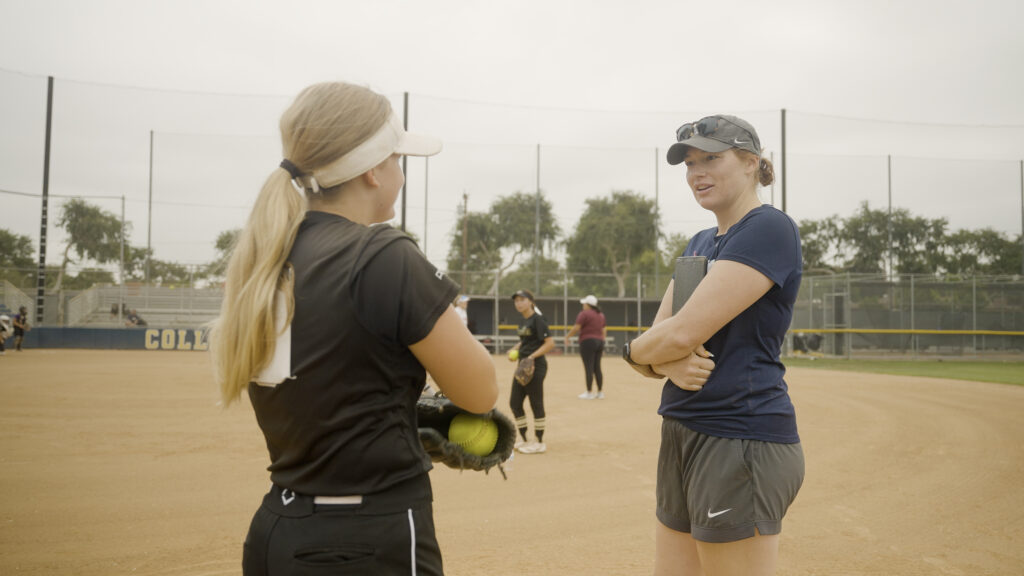
Recruiting rarely starts with an offer right out of the gate. It starts with an introduction, a reply, maybe film, a camp visit—essentially, your path to a roster spot begins by building a relationship with a coach over time. Coaches are looking for athletes they’re excited to have on their roster for four years, and the way you communicate tells them almost as much as your stats do.
This article walks through how to introduce yourself, what to say (and skip) once a coach responds, and how to keep a relationship moving toward an offer.
Your first introduction
The first email to a coach can feel intimidating, but it’s a huge opportunity to put yourself on their radar. And the best part is that it’s an aspect of college softball recruiting that you’re completely in control of! You’re not asking for a scholarship right off the bat—you’re just giving a coach an idea of who you are and what you can bring to their program.
Here’s what you should include:
- Tell them who you are. Name, graduation year, position, high school and travel team.
- The basics that let them evaluate you. Include measurables, your GPA, test scores, and a link to recent film—ideally trimmed down to your strongest at-bats or pitches. Have full innings available if requested.
- Why you’re interested. Include a sentence on what specifically drew you to their school. This will help you stand out and show the coaching staff that you genuinely care about their program.
- Your schedule. Make sure coaches have the dates of your upcoming games, camps, and showcases where they can see you play.
Personalize it, every time. A coach can tell in one line whether you actually looked at their program or just swapped out the school name, and that’s often the difference between an email that gets a second read and one that gets deleted.
What to leave out
Start an open, honest conversation with coaches and just be genuine. Skip the superlatives, don’t list every single camp you’ve ever attended, and skip anything that starts to sound like a resume instead of a person. One clear, well-organized message beats an exhaustive one. Remember, coaches are short on time—just give them the broad strokes.
Check out what college softball coaches look for if you’re not sure how to mention playing multiple positions or both pitching and hitting.
Keeping the conversation going
Coaches are managing recruiting, running their program, and coaching their team, so a quiet stretch after your first email is completely normal—it usually just means that they’re busy! If you’re not getting replies, don’t be afraid of reaching back out with updates; a once a month cadence is great.
Consider reaching out with:
- Updated film from a recent tournament or showcase.
- A strong performance worth flagging—a big outing, a breakout weekend.
- An improved GPA or test score.
- Your schedule for an upcoming event they might attend.
Every follow-up is a chance to strengthen your opportunity to get an offer, so don’t be afraid to reach out. Keep NCAA contact rules in mind as the relationship develops—coaches can respond and initiate contact within certain windows depending on your grade and division. The recruiting timeline breaks down when those rules apply.
Loop in your coaches
Your coach in recruiting plays a real, active part in this process—they’re here to advocate for you. A college coach trusts what your own coaches say about your work ethic, coachability, and character, often as much as anything you could say about yourself.
When speaking with college coaches:
- Give your current coaches context. Let them know which programs you’re talking to so they can speak to it if a college coach reaches out.
- Ask for an introduction when it makes sense. A travel or high school coach who already knows a program can open a door faster than a cold email.
- Keep them updated on where things stand. The more they know, the better they can advocate for you along the way.
Stay in touch as the relationship grows
As a coach gets to know you, the relationship shifts from an introduction to an ongoing conversation. Respond to their messages promptly, and be honest about your timeline and your interest in their program.
Continue to keep them updated with real progress: new film, a season update, a grade report, or if you decide to commit elsewhere. Keep in mind that consistency matters more than volume—a coach who hears from you every month with something meaningful will remember you.
Final thoughts: Building a relationship with a college coach takes genuine interest, consistency, and honesty. Send a strong first message, follow up with purpose, bring your coaches into the process, and keep the conversation going as it develops. The athletes who stand out aren’t always the loudest—they’re the ones who make it easy for a coach to keep saying yes to another conversation.