Softball Film, Showcases, and Exposure
Getting seen by college softball coaches comes down to three things: your film, the camps and showcases you attend, and how you perform when a coach is actually watching.
A coach can only be in one place at a time. You might play an entire showcase game without a ball hit to you, and the coach who came to evaluate your defense leaves without seeing what they needed, even though you played well. That’s why exposure works best across several settings: video makes particular skills easy to review, camps allow repeated reps with instruction, and games reveal your choices against an opponent.
A good softball recruiting video is where most of this starts.
Your softball recruiting film
A good softball recruiting video should be easy to open, easy to follow, and clearly about you. Put your name, graduation year, positions, team, and contact information at the beginning. Identify yourself in game footage, and test the link from an account that isn’t yours before sending it.
Open with useful at-bats, pitches, or fielding rather than a long introduction. A clear view of your movement helps a coach evaluate you more quickly. Keep the opening brief, identify yourself, and lead with your strongest plays.
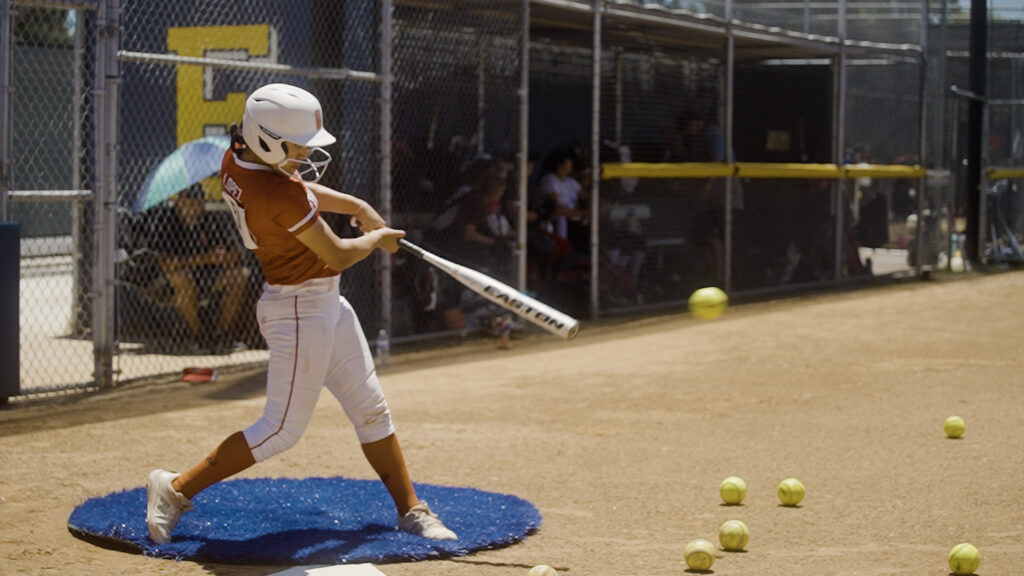
Skills footage and game footage can work together. A controlled session lets a coach see several relevant reps without waiting for a particular play to happen. Games show how you use those skills against an opponent. Neither needs to exclude the other.
Make sure footwork is visible, not just the ball—a coach evaluating a swing or a throw needs to see your base, not just the result. Give them a useful first look, then have more footage ready if they ask for it.
What softball recruiting film should show, by role
Think about the questions a college softball coach would ask when they’re recruiting you. Your video should help answer those questions without making the viewer guess what’s happening.
Pitchers: Show your delivery and examples of the pitches you use—and label them when helpful. Choose angles that show the release, flight, and target; a side view adds information about the delivery. Include game sequences so a coach can see how you approach hitters, and keep full innings or outings available separately. Ask the coaches recruiting you if they want a particular camera setup.
Catchers: Include receiving, blocking, transfers, and throws with the target visible. A close crop showing only your upper body leaves out the footwork a coach needs to evaluate. Add game examples of how you manage runners and work with the pitcher.
Infielders: Show routine plays, movement in both directions, and throws from your position. Include the approach to the ball and what happens after you field it. A shortstop’s double-play work or a first baseman receiving difficult throws helps show the actual job.
Outfielders: Give the frame enough width to show your first move, route, catch, and throw. A clip that begins when the ball enters your glove misses most of the evaluation.
Hitters: Show swings from an angle that makes your setup and movement visible, plus live at-bats when available. If slapping or bunting is part of your game, include it. Coaches should be able to tell which clips come from a tee, toss, batting practice, or competition.
Two-way athletes: Separate pitching, hitting, and defense into clear sections or links. Make it simple for a coach to evaluate the role they need while seeing the additional skills you offer.
Softball showcases and college camps
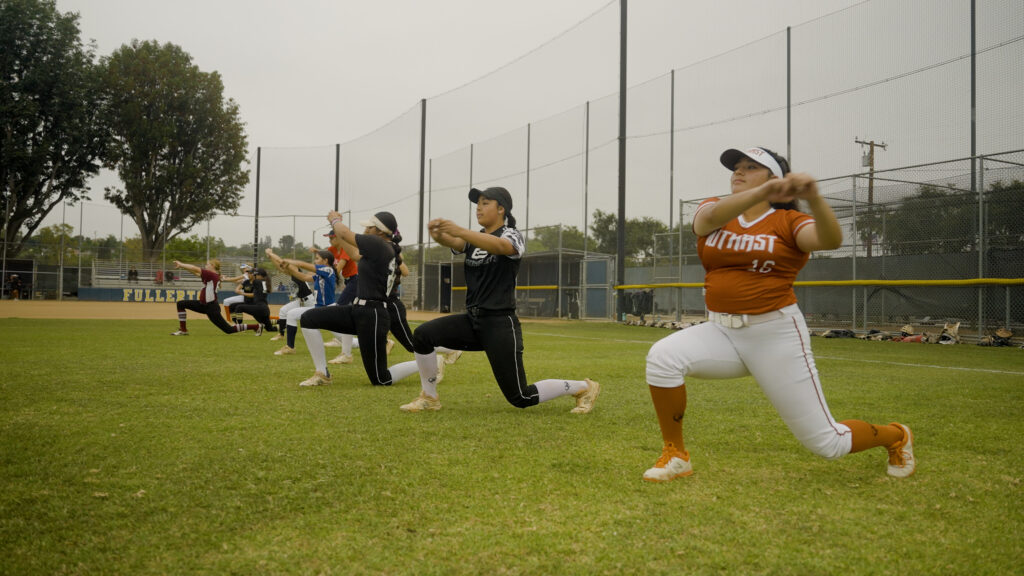
A travel softball showcase tournament lets coaches evaluate you in competition. A college camp can boost your exposure and put you directly into a coach’s drills and instruction. A multi-school camp may offer access to several programs, though you should confirm who is attending and how the sessions work.
Instruction and evaluation can happen at the same event. Don’t assume an instructional camp has no recruiting value, or that an “elite” camp invitation means you’re already on a coach’s list.
Before registering, ask:
- Which coaches will actually work with your age group and position?
- How many athletes will attend, and how are repetitions organized?
- Does the event match the schools and level you’re pursuing?
- Would the instruction still be useful if no recruiting conversation followed?
- What is the total cost, including travel?
For D1 prospects, attending a camp doesn’t override the grade-level recruiting restrictions. You can attend camps and learn from coaches at any time, but in D1 softball, coaches can’t have recruiting conversations with you at their camps until September 1 at the start of your junior year.
In-season evaluation
Evaluation doesn’t only happen at huge showcases. A college program might come to a regular high school or travel game specifically to watch you, especially if you’re close to campus or already on their radar. It provides coaches a different context and demonstrates how you play outside the pressure of a big national tournament.
Let coaches you’re talking to know where they can find you. Send over your schedule, team name, jersey number, graduation year, and position. If you’re pitching, let college programs know when you’ll be throwing as soon as your travel or high school coach can confirm it.
Afterward, send a brief follow-up if appropriate. Thank the coach for attending if you know they did, include relevant new footage, and refer to any next step you discussed. If you aren’t sure whether a coach watched, a short update with your new footage is enough.
Keep playing your game. A coach may come to see you and get only a handful of chances to watch your specific skills. That is one reason film and continued communication matter: they can fill in what a single game didn’t show.
Final thoughts: Film, camps, and games give coaches different ways to evaluate you. Keep your video current, choose events that fit your school list, and communicate before and after opportunities to be seen. Consistent preparation helps a coach follow the athlete you’re becoming.