Building Relationships With College Football Coaches

Recruiting is a relationship business. Film gets you on a coach’s radar. Measurables open doors. But relationships are what get you an offer to play college football.
You Have to Initiate the Conversation
One of the biggest mistakes we see athletes make is waiting to be found. Football coaches are managing massive rosters, evaluating hundreds of prospects, and trying to win games—all at the same time. They’re not going to find you unless you initiate.
Take the first step. Reach out. Introduce yourself. Let coaches know you exist, what you bring, and why their program interests you. Do it early, do it consistently, and do it even when you don’t hear back.
One email isn’t a relationship. Building a relationship means a series of touchpoints over time—film updates, camp appearances, follow-ups after games. Every interaction is another brushstroke in the picture coaches are forming of you.
Understand What College Football Coaches Actually Need
The athletes who build the best relationships with coaches aren’t just thinking about what they want personally—they also grow to understand what coaches need.
Football coaches are building rosters, not collecting talent. They need specific positions filled, for specific class years, in a specific scheme. Before you reach out to a program, do your homework. The more you understand about a program before you contact, the more meaningful every conversation becomes.
Relationships Take Time
The football coaches who eventually offer you aren’t doing it because you sent a great email or had a pick-six in a 7v7. They’re doing it because they’ve watched your journey—your development, your character, your consistency—and decided their program is the natural next step for you.
That relationship starts earlier than most athletes think. And it’s built through years of genuine, consistent communication—not a flurry of messages right before signing day.
If a coach goes quiet, don’t panic. Football coaches are under enormous pressure. They’re buried in film, managing their current roster, and navigating a transfer portal that never stops moving. Stay persistent. Keep reaching out with genuine updates. A coach who goes quiet isn’t necessarily a coach who’s lost interest.
Your High School Football Coach is Part of This
There’s a third party in every recruiting relationship that doesn’t get talked about enough: your current coach.
College coaches call high school coaches constantly. They ask who’s worth watching, get reads on a prospect’s character and work ethic, and use those conversations to fill in what film can’t show them. Your high school coach is one of your most valuable recruiting assets—don’t leave them out of the process.
Keep them in the loop on which programs you’re reaching out to. CC them on emails when it makes sense. Build a strong enough relationship with them that when a college coach calls, your name comes up immediately and enthusiastically. Your high school football coach is your biggest advocate; use them as a resource.
Face-to-Face Matters
There’s a meaningful difference between being a name in an email subject line and being a real person a coach has met, shaken hands with, and watched compete.
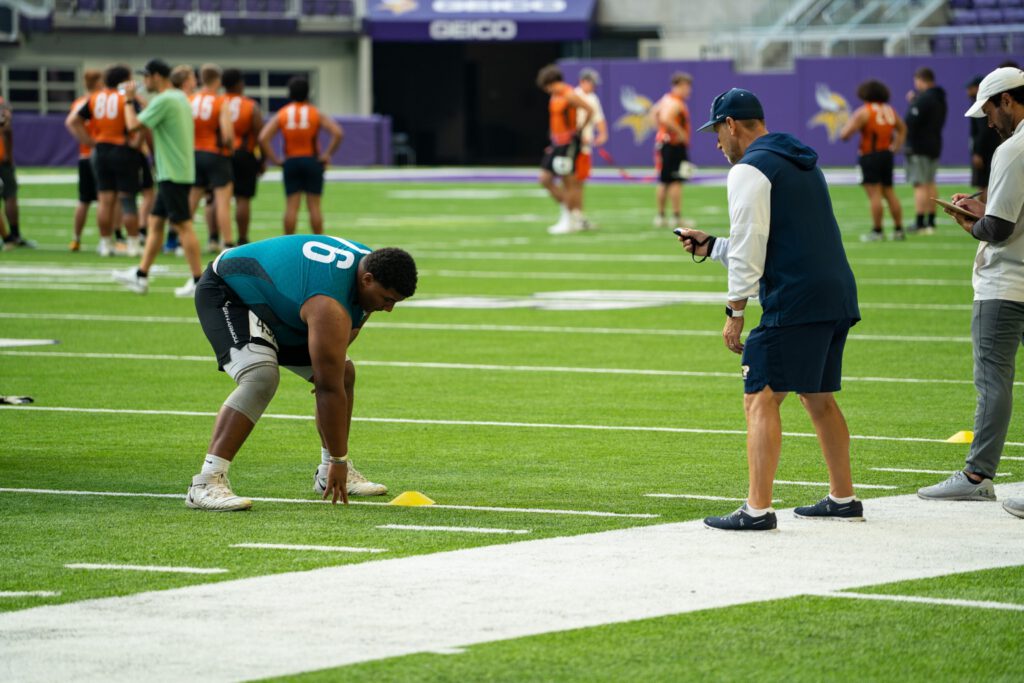
When you’re at a camp or showcase where a coach from a program you’re interested in is present—introduce yourself. Extend your hand, make eye contact, and let them know that you’re genuinely interested in what they’re building. It’s an absolute gamechanger, and it takes all of 30 seconds. When you’re choosing which camps to attend, prioritize the programs you actually want to play football for. Showing up on their campus and competing in front of their staff is one of the highest-value things you can do in this entire process.
Final thoughts: No shortcut exists to building real relationships with coaches. It takes time, consistency, and genuine investment in understanding what a program needs and what you bring to it. Start early, show up consistently, and treat every interaction as part of the bigger picture coaches are forming of you.