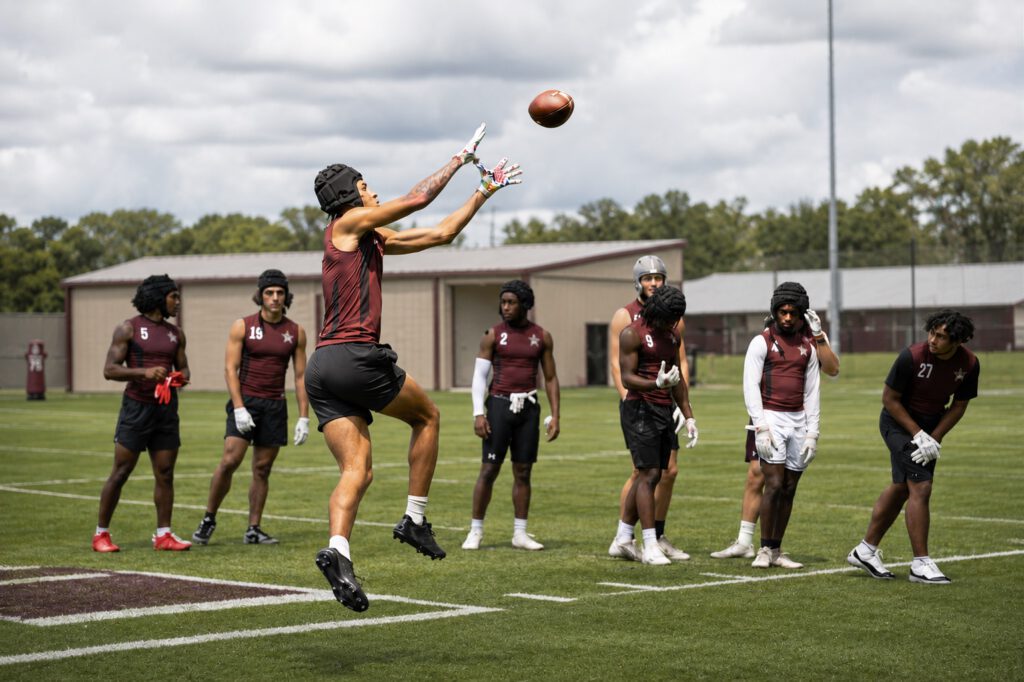
How College Football Recruiting Really Works
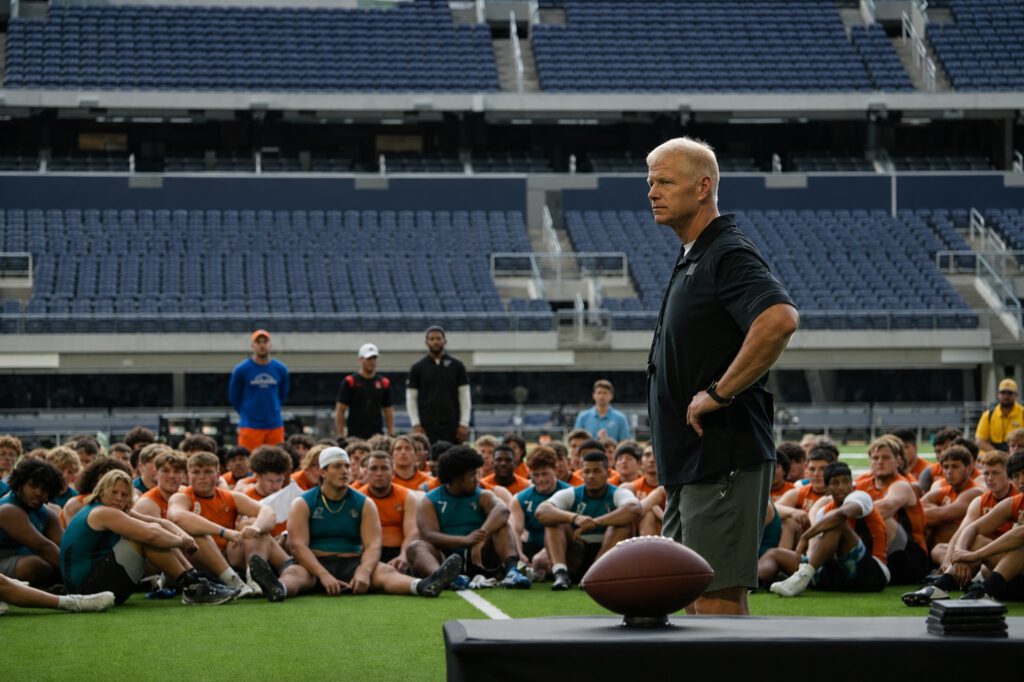
There’s a common misconception that successful college football recruiting looks like getting 4 or 5 stars on Rivals, having SEC and Big 12 coaches fight over your signature, and having a marquee signing day where you’ve got 5 hats on the table before you.
Glamorous? Absolutely. Realistic? Not exactly.
The reality is that coaches don’t just stumble upon athletes—they identify them. Coaches recruit for specific roles, at specific positions, in specific class years. They’re not always just looking for the most talented player available. They’re looking for the right player for a defined need on their roster.
And above all, they’re looking for the athlete that best fits their program’s culture.
Why college football coaches are recruiting
Football rosters are massive compared to every other college sport. FBS schools in the House settlement can carry up to 105 players and may put any or all of them on scholarship. Schools outside it keep the old 85-scholarship limit. Every year, coaches lose seniors and replace players who leave the program—which means they’re constantly filling multiple positions across multiple class years simultaneously. A few things that make football uniquely complex:
- Roster size. No other college sport manages this many athletes, this many positions, or this many recruiting needs at once.
- Class cycles. Coaches recruit multiple classes simultaneously, which means timing and fit are always position-specific.
- Scheme fit. A player who thrives in a spread offense may not fit a pro-style system—coaches recruit for their system, not just the position.
- The transfer portal. It’s reshaped how rosters get built, creating both more competition and more opportunity for high school recruits.
- Budget size. There’s not another collegiate sport that is as well-funded as football.
This is why fit matters more than raw talent. A football player who checks every box athletically but doesn’t fit a program’s scheme, culture, or class needs won’t get an offer—while a less-heralded athlete who fits perfectly will. Coaches make these decisions every single year.
The other element of football recruiting that most sports don’t have: a rigid, high-stakes timeline. NCAA contact rules, evaluation periods, signing days—there are hard dates that govern when coaches can talk to you, visit you, and offer you. Missing these windows (or not understanding them!) cost athletes real opportunities.
How rosters are built, how coaches think, how timing shapes everything—understanding these things is the foundation of a smart recruiting approach.
Coaches recruit positions and schemes, not just talent
Football is the most positionally diverse sport in college athletics. While being a great football player is a prerequisite, programs are really recruiting for specific positions, in specific schemes, for specific class years. This means an elite wide receiver won’t get an offer from a program that already has 12 on the roster during this recruiting cycle.
How this affects college recruiting:
- Position matters more than rating. A program already set at quarterback typically isn’t going to offer another—the exceptions are rare.
- Scheme matters as much as position. A spread offense and a pro-style offense aren’t run the same way. The same QB might fit one and not the other.
- Class cycles dictate timing. Programs plan multiple classes ahead and know exactly how many recruits they need at each position per year.
- Your high school position may not be your college position. Coaches evaluate athleticism first, position fit second. Wide receivers become defensive backs. Quarterbacks become safeties. It happens every year, at every level.
- Character and coachability are the tiebreakers. Two athletes with similar tape and similar measurables—the one who fits the program’s culture is the one who gets the offer.
If a program isn’t recruiting your position this cycle, the door isn’t closed forever. Coaches keep notes, and the same staff often comes back for the right athlete in a future class.