The College Football Recruiting Timeline
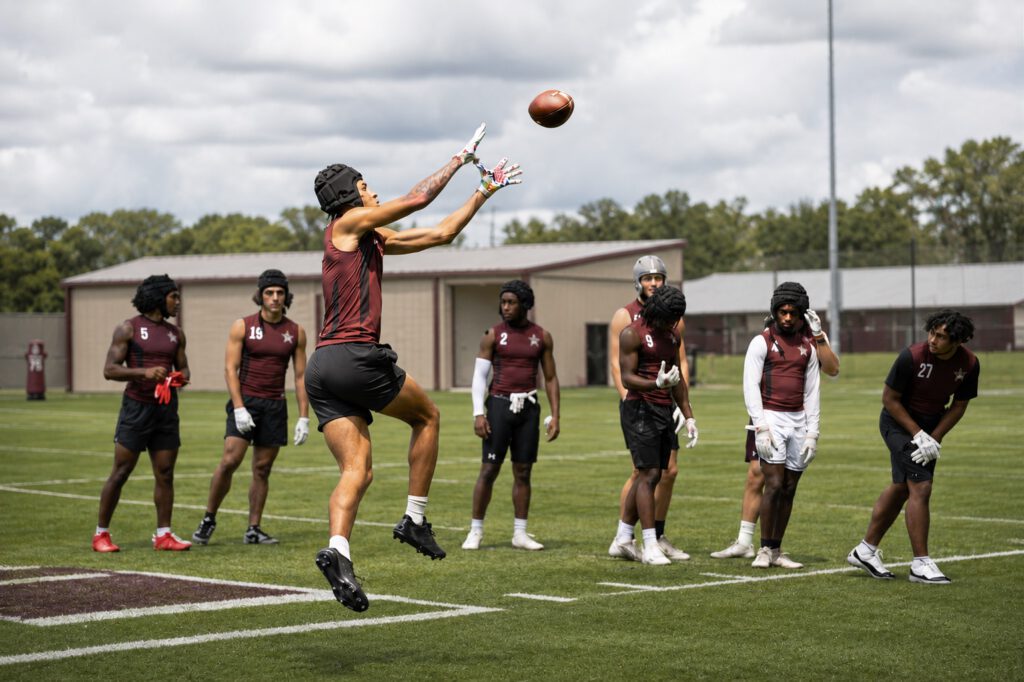
Recruiting looks different for every athlete. Some athletes are on coaches’ radar extremely early. Most don’t see real traction until junior or senior year. Both experiences are completely normal.
Middle School
If you’re in middle school and already thinking about playing college football, that’s awesome. It means you love the game—and in 7th and 8th grade, that’s the only thing that matters.
Recruiting just isn’t happening at this level. College coaches aren’t evaluating 12- and 13-year-olds, regardless of what you might see on social media. What is happening? You’re learning the habits and creating the foundation that your entire career as a student-athlete will be built upon.
If you’re in middle school, focus on:
- Enjoying it. The athletes who make it the furthest are the ones who genuinely love playing football. Every time you touch the field, try to have as much fun as possible.
- Learning the game. Start really working on the fundamentals now—it pays off when things speed up in high school. Watch NFL, NCAA, and even your school’s varsity team.
- Taking school seriously. Good academic habits formed early will carry you throughout high school—and even into college!
- Being healthy. Sleep well, eat well, and spend time with your friends and family. These are the cornerstones of living a healthy life and being the best version of you.
There’s no recruiting pressure at this stage—and that’s a good thing. Use this time to be a kid, get better at football, and fall deeper in love with the game.
Freshman Year
High school football is a different story. The competition is faster, the playbooks are more complex, and the physical demands are real. Freshman year is about rising to meet that—growing into your body, finding your position, and starting to take your development seriously.
Recruiting isn’t a top priority yet, but feel free to start reaching out to coaches. The foundation you build now directly shapes what happens as an upperclassman. Coaches evaluating you in two years will be looking at the athlete you’ve become—now is the time to get building.
What matters right now:
- Get in the weight room. Strength and conditioning is one of the biggest separators in football recruiting—but learn to do it right. Work with your coaches or a qualified trainer to build an age-appropriate program focused on form, movement, and injury prevention before anything else.
- Lock in academically. Grades and eligibility matter sooner than most athletes expect. Take school seriously, do your homework, and ask for help from your teachers if you need.
- Start attending camps. It’s never too early. Camps build skills, expose you to better competition and college coaches, and put you directly in recruiting environments.
- Study the game. Watch lots of football. Learn different positions—coaches look for flexibility. Learn the schemes, the reads, and the details that separate good players from great ones.
Nobody is expecting you to have a recruiting plan at 14. But if college football is your goal, freshman year is time to start putting in the work.
Sophomore Year
Sophomore year is when things start to get real—at least in terms of preparation.
NCAA rules still prevent coaches from contacting you directly, but evaluation is picking up. Coaches can and will come watch you play. The right performance in front of the right person can start a conversation that carries all the way to an offer.
If you’re a sophomore, start:
- Building your first highlight film. It doesn’t need to be polished—it needs to be honest. Get footage from games and skills camps, and start putting clips together.
- Becoming a camp regular. Camps are so important. They are where coaches evaluate you in person. Go to the camps hosted by programs you’re interested in and compete hard.
- Reaching out to coaches. You can contact coaches even if they can’t reply yet. Introduce yourself, express your interest, and share your film.
- Being honest about your level. Talk to your coaches, watch film of college players at your position, and start forming a realistic picture of where you fit.
Junior Year
Junior year is the most important year in the football recruiting process—full stop.
This is when coaches are actively building their classes. It’s when the NCAA contact rules open up and real conversations can happen. And it’s when everything you’ve been building—your game, your grades, your relationships—starts to show results.
The most important football-specific date to know: FBS coaches can make their first permitted phone call to a recruit starting June 15 after sophomore year. That’s when the phone starts ringing for athletes who’ve done the work to get on coaches’ radars.
If you’re a junior, focus on:
- Communicating consistently. Reach out to coaches, respond promptly, follow up after camps, and keep building the relationship. Don’t go quiet.
- Attending camps and showcases. Get to events where coaches from your target programs will be present. Spring and summer camps are critical.
- Taking unofficial visits. Get on campuses. Start getting a feel for where you could see yourself playing, learning, and living.
- Keeping your grades up. The NCAA sets a minimum 2.3 GPA for D1 eligibility—but most programs expect more. Strong grades keep your options open.
Senior Year
Senior year is about seeing it through—finding the right program and committing to it.
For most athletes, this is when official visits happen, offers get evaluated, and decisions get made. The Early Signing Period opens in early December, with a second signing window in February. Neither deadline should rush you into a decision you’re not ready to make.
A few things worth knowing about senior year:
- The Early Signing Period. Athletes who are ready can sign early in December; the period is the first Wednesday until Friday. Those who aren’t can wait until the February signing window—there’s no penalty for waiting.
- Late offers are always worth considering. Some of the best fits come after signing day when rosters shift and needs change. Stay engaged and keep your options open—many athletes find life-changing opportunities they had never even considered.
- JUCO is always an option. If the right four-year opportunity doesn’t materialize, JUCO gives you two years to develop and find the right fit at the next level.
- Your senior season is your last audition. Coaches are watching film through the fall. Keep competing at the highest level you can.
If you’re a senior and haven’t received any offers yet—keep going. The timeline is different for everyone, and the right fit has a way of showing up when you least expect it.
NCAA football recruiting periods: What they mean for you
Throughout the year, the NCAA breaks the recruiting calendar into specific windows that govern how and when coaches can communicate with you.
- Contact period: Coaches can meet you anywhere—on or off campus. Real conversations, visits, and offers happen here. Face-to-face, calls, texts, and emails are all allowed.
- Evaluation period: Coaches can watch you play and visit your school—but can’t talk to you in person off campus. Calls, texts, and emails are allowed.
- Quiet period: In-person contact is limited to campus. No off-campus visits or evaluations—but you can still go to them. Calls, texts, and emails are allowed.
- Dead period: No in-person contact or evaluation anywhere—on or off campus. No visits, no evaluations. Calls, texts, and emails are still allowed.
- Recruiting shutdown: All recruiting stops. Coaches can’t even reply if you reach out. Coincides with holidays and championships. No contact of any kind.
Again, these rules apply to coaches, not to you. You can reach out, attend camps, and visit campuses any time. Don’t wait for a coach to initiate—take control of your recruiting process.
Final thoughts: There’s no perfect timeline in college football recruiting. Some athletes commit early. Others find the right opportunity late—sometimes after signing day. What matters is that you keep developing, keep communicating, and stay open to where the right fit takes you. The athletes who navigate this process best aren’t always the most talented. They’re the most prepared.