Film, Camps and Exposure: What Actually Gets You Noticed for College Football
Visibility is what gets you recruited for college football. And for the vast majority of athletes, visibility doesn’t happen on its own—it has to be built deliberately, over time, through film, football camps, and consistent exposure to the right people.
Here’s how each piece works.
Your Football Game Film
Film is how college football coaches evaluate you on their own schedule. It’s often the first thing they look at—and it decides whether the conversation continues.
The most important distinction to understand: highlight film and full game film serve different purposes. Your highlight reel gets a coach interested. Full game film is where they actually evaluate you.
Highlights show your ceiling. Full game film shows how you play football when you’re tired, how you respond after a mistake, and what you do between plays. Always make full game film available alongside your highlights—and tell coaches where to find it.
What good football film looks like:
- Lead with your best play. Coaches decide whether to keep watching within the first minute. Don’t make them wait for it.
- Keep it between three and five minutes. Include roughly 15 to 25 plays; coaches want quality over quantity.
- Show variety. Don’t stack five similar plays in a row. Give coaches a quick sense of your full skill set early.
- Identify yourself in every clip. A simple circle or arrow before the play starts—then let it disappear so coaches can evaluate naturally.
- Start with a title slide. Name, grad year, position, height, weight, GPA, and contact info. Make it easy for coaches to know exactly who they’re watching.
- Use Hudl if your school or club team already does. It’s the most widely used platform in high school athletics and lets you share footage directly with coaches in one click.
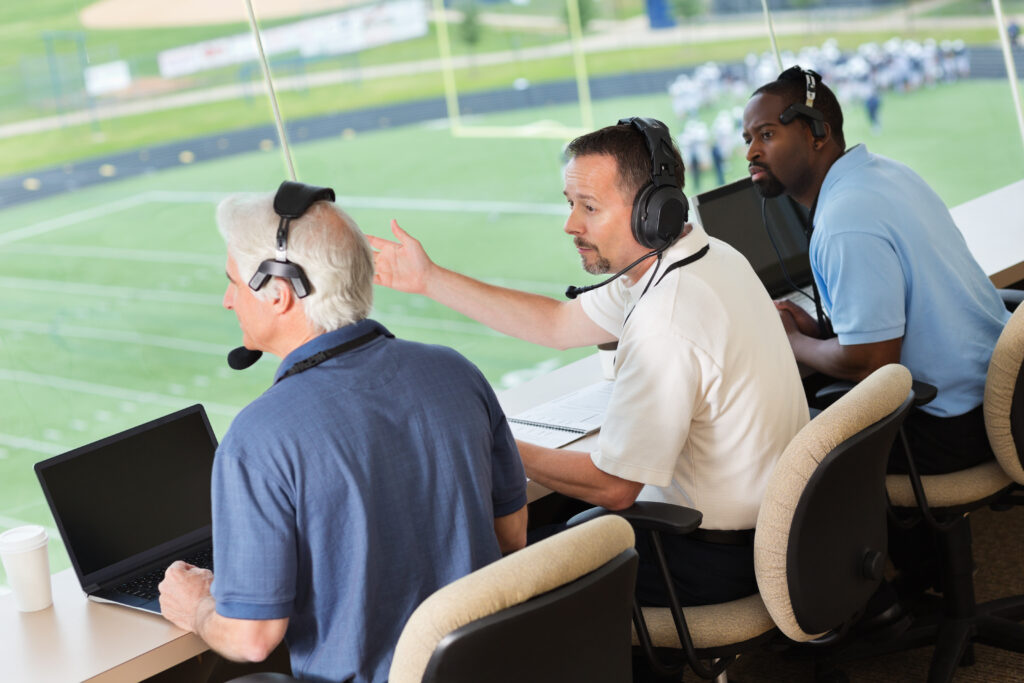
- Film from the press box. Sideline footage can be awkward and difficult to evaluate. Get your tripod planted at the top row or in the press box to give coaches the best view of your highlights.
Also, you should avoid: long intros, slow motion, heavy edits, distracting music, and low-quality sideline footage.
Know your Benchmarks
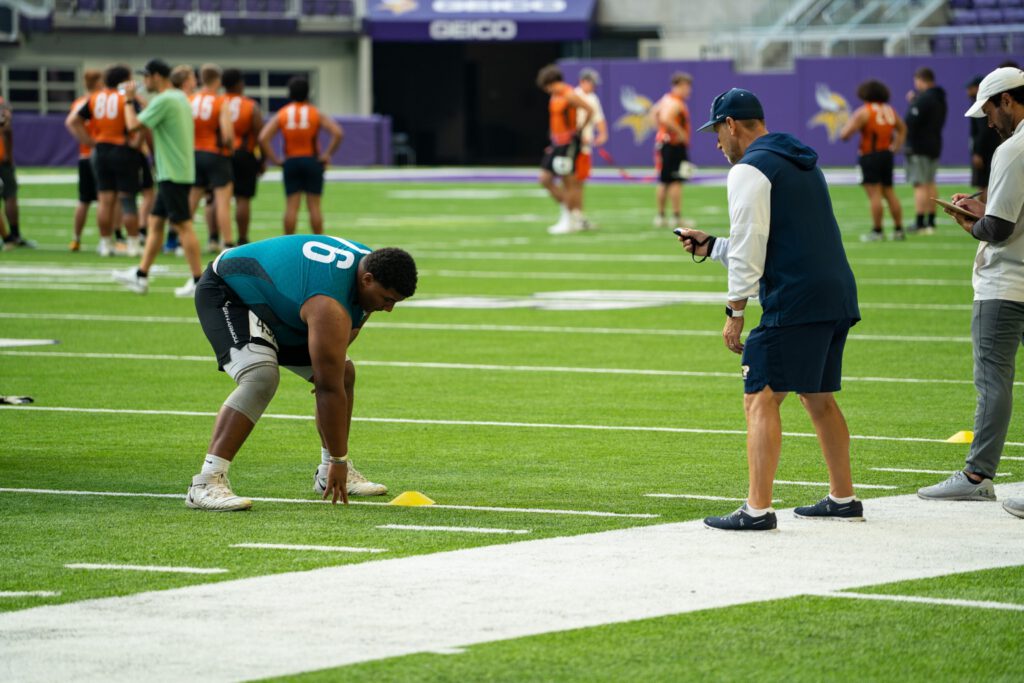
Before you walk into a camp, know the benchmarks for your position at the levels you’re targeting. Knowing the baselines for each combine drill and where you stand puts you ahead of most athletes on the field.
The numbers aren’t a ceiling. They’re a target. Train specifically for your position, know where you are, and use the gap between where you are and where you want to be as a roadmap.
What to Know About Football Camps
Football camps are one of the most valuable tools in the recruiting process.
Camps provide a real opportunity to be evaluated in person by coaches who might otherwise never see you play. But attending one camp doesn’t guarantee you anything other than practice. Anyone who tells you otherwise isn’t being honest.
There are a few different types worth knowing:
- Prospect camps. Hosted directly by college programs on their campus. If you’re serious about a school, attending their camp is one of the most direct ways to get on their radar.
- Position camps. Focused on developing and evaluating athletes at a specific position. These tend to attract coaches looking for depth at a particular spot.
- Combines. Measurable-focused events where you’re tested on speed, strength, agility, and position-specific drills. A strong combine performance can open doors early in the process.
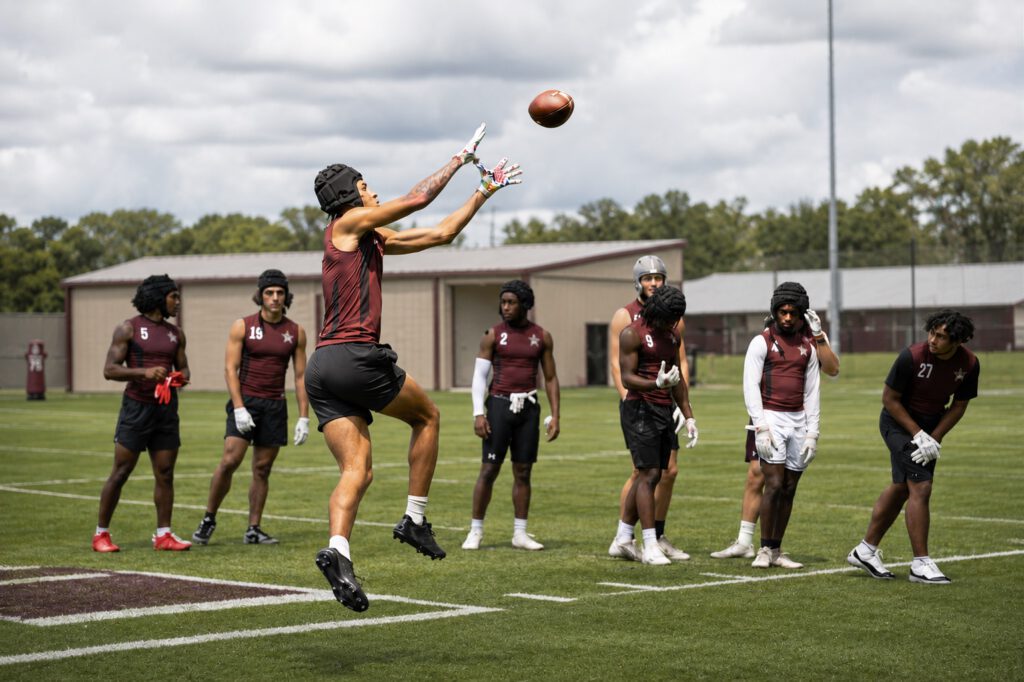
- Showcases + 7v7. Multi-team competitive events where coaches come to evaluate, not teach. These attract a wider range of coaching staff from different programs and levels.
A few things worth knowing about 7v7 specifically: it’s become a significant part of the football recruiting landscape, particularly for skill position athletes. It puts you in competitive situations against other recruits, in front of coaches who are specifically there to evaluate. If you play a skill position, take it seriously.
How to make the most of any camp
- Come prepared. Know the drills, research the coaching staff, and practice in the weeks leading up to it.
- Introduce yourself to coaches. Don’t wait for them to come to you. Walk up, shake hands, tell them your name, position, and where you’re from.
- Compete hard in everything. Every drill, every rep, every one-on-one. Coaches are watching how you work—not just how you perform.
- Follow up afterward. Send a thank-you email to any coach you spoke with. Reference something specific from the day. This is where the relationship starts.
In-Season Evaluation
From September 1 through November 30, NCAA coaches enter an evaluation period. They can attend football games, watch film, and visit your school. They can’t make off-campus contact with you directly—but they’re watching.
This means every Friday night is an opportunity. You never know who’s in the stands or pulling your film that weekend. Coaches want to see how you play under pressure, how you respond to adversity, and how you compete when the game is on the line.
A few things worth keeping in mind during the season:
- Play every game like someone is evaluating you. Whether the stadium is packed with scouts or totally empty, compete to show what you can do. Word of mouth can travel far.
- Keep your film updated. If your school films games, make sure you have access and keep your Hudl profile current.
- Let coaches know your schedule. If you’re in contact with programs you’re interested in, tell them when and where you’re playing. Make it easy for them to come see you.
Character and Coachability
Everything above matters. But character, attitude, and the way you carry yourself—on and off the field—matter most of all.
Coaches aren’t just recruiting a player. They’re making a multi-year investment in a person. They need to know you’ll show up every day, respond to coaching, hold yourself accountable, and make the people around you better. A program is only as strong as its culture—and coaches are fiercely protective of it.
Your reputation travels further than you think. Coaches talk to your high school coaches, your position coaches, and people in your community. The way you treat your teammates, your opponents, and the people around you every day contributes to the picture coaches are forming of you—long before you ever meet them.
A few things worth living by:
- Be coachable. Handle feedback well and genuinely want to get better. Coaches recruit athletes they can develop—and that starts with being open to it.
- Be a great teammate. The athletes who get recruited aren’t always the star player. They’re the ones everyone wants on their side.
- Be consistent. Show up on time, do what you say you’re going to do, and carry yourself the right way when no one is watching.
Athletic ability can be developed. But a reputation for being a great teammate and a good person? That’s what coaches are betting on first—and it’s entirely in your hands.
Final thoughts: Exposure isn’t a single event—it’s a body of work built over time through consistent film, intentional camp appearances, and strong in-season performance. The athletes who get noticed are the ones who show up everywhere, compete hard every time, and make it easy for coaches to find them.