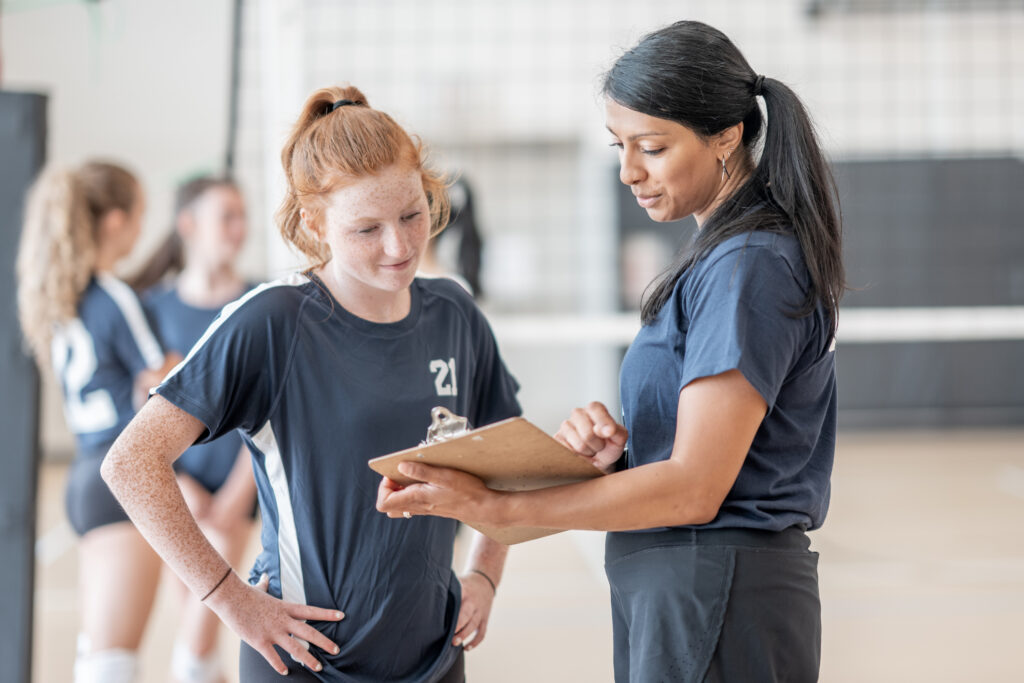
Building Relationships With College Volleyball Coaches

Recruiting is entirely about building relationships, and that’s the honest truth.
The athletes who find the right fit are the ones who have built real connections with college coaches over months and years. Skill gets you on a coach’s list. Film gets you noticed. But relationships are what get you on a college volleyball team.
Here’s how to think about building real relationships with college coaches—and what makes them stick.
You need to reach out first
The biggest myth in recruiting is that coaches will find you. If you’re playing at the top level and heading to the triple crown, they might. But even there, it’s unlikely coaches will be lining up to offer you. The truth is that the relationships that lead to offers usually start because the athlete reached out first.
What this means is that:
- Make sure coaches know who you are. Coaches are recruiting for specific positions in specific class years. They can’t find you if they don’t know about you.
- Reaching out can start as early as middle school. NCAA rules limit when coaches can write back, but they don’t limit when you can write to them. Coaches read everything you send, even if they can’t reply yet.
- Introductions take many forms. Email, social, a hello at a camp, an introduction through your club coach. The medium matters less than showing up.
The athletes who go on to play in college aren’t always the most talented. They’re the ones who took initiative, kept showing up, and built relationships from their side first.
Understand what coaches need
Good relationships happen when both sides understand what the other brings to the table. Coaches recruit athletes who fit specific positions, in specific systems, in specific class years. Knowing how to talk about your game in the context of what a program actually needs is one of the biggest differences between outreach that lands and outreach that doesn’t.
It comes down to preparation. Coaches can tell when an athlete has done the work to understand a program, and they can tell when they’re reading the same generic note every other program got. The athletes who do that prep consistently are the ones who turn outreach into a conversation.
Relationships take time
Real relationships develop over months and years. A single email rarely changes a coach’s recruiting picture. What does change is the picture of you that builds across consistent updates over time.
A few things to keep in mind:
- Coaches see development through repetition. A junior who’s been emailing them since freshman year shows them a story of growth, progress, and consistency. A junior who emails for the first time in may only shows them a snapshot.
- Updates carry more weight than introductions. Coaches care about who you’re becoming, so sharing measurables that climbed, tournaments where you played up, and a GPA that improved tells them about your trajectory.
- Patience compounds. Some of the best recruiting stories are athletes who emailed coaches consistently for two years before any of them wrote back, then heard from three programs in the same week once the rules let coaches respond.
The volleyball world rewards consistency. Coaches who watch your story develop over time tend to be the ones who fight hardest for you when offer decisions land.
Your club coach is part of this
In volleyball, the club coach is part of every recruiting relationship—usually more than families realize. College coaches call them constantly. Their advocacy, their honest read on you, and their relationships with college programs shape your recruiting story alongside your own outreach.
A few things to keep in mind:
- CC your club staff on outreach to college coaches. They know who you’re talking to, what you’re saying, and can speak to it when the college coach calls them. Your relationship with the college coach is stronger when your club staff is at the table.
- Use your club coach as a sounding board. They’ve seen athletes at every division and can give you a real read on where your game fits and which programs make sense to target. Lean on that.
- Their advocacy carries weight. A club coach with strong relationships across D1, D2, D3, and NAIA programs can introduce you to coaches who might never have heard your name otherwise.
- Be the kind of athlete your club coach wants to advocate for. Coachable, hardworking, consistent. Their endorsement is earned through how you show up at practice every day.
The athletes who get the most out of their club coach treat them as a partner in the process. The ones who don’t, leave a real advantage on the table.
Face-to-face at tournaments and camps
There’s no substitute for a strong, in-person interaction with a coach at a program you’re interested in. A handshake, a real conversation, a coach watching you compete in front of them—those are the events that turn a name on a list into a real prospect.
A few things to know:
- Camps are real face-to-face territory. Go to college camps at programs you’d love to play for, compete every drill, and introduce yourself to coaches in person.
- Tournaments are a huge opportunity. Coaches sit at the bench, watch from the stands, and sometimes hang out after matches. If you see a coach, walking up and saying hello is a great move.
- Body language travels. How you move between rallies, how you respond to mistakes, how you celebrate teammates—coaches see all of it when they’re in the gym.
- Confidence matters. Coaches see hundreds of athletes. The ones who can introduce themselves with a clear handshake and a steady eye stick in their memory.
How you show up matters
Coaches are recruiting people they’ll spend four years with. They want the athlete they want to sit next to on a long bus ride. They’re looking for someone they can rely on—be that person.
A few things this means in the relationship context:
- Be responsive. When a coach reaches out, write back fast. Speed signals interest and builds momentum in the relationship.
- Follow through on what you say you’ll do. If you said you’d send updated film, send it. If you said you’d be at a tournament, be there. Coaches notice the athletes whose word can be counted on.
- Treat everyone like a coach is watching. The volleyball world is small. How you treat tournament officials, hotel staff, your own teammates—all of it travels.
- Be the kind of athlete coaches enjoy talking to. Curious, prepared, gracious, focused. The athletes who make recruiting conversations feel easy are the ones coaches keep coming back to.
Final thoughts: Coaches need to see you to recruit you, and they look in specific places. Take care of your film, get yourself to camps at programs you love, and play every match like part of a story you’re building. The athletes who get noticed are the ones who show up on purpose.