The Different Levels of College Basketball
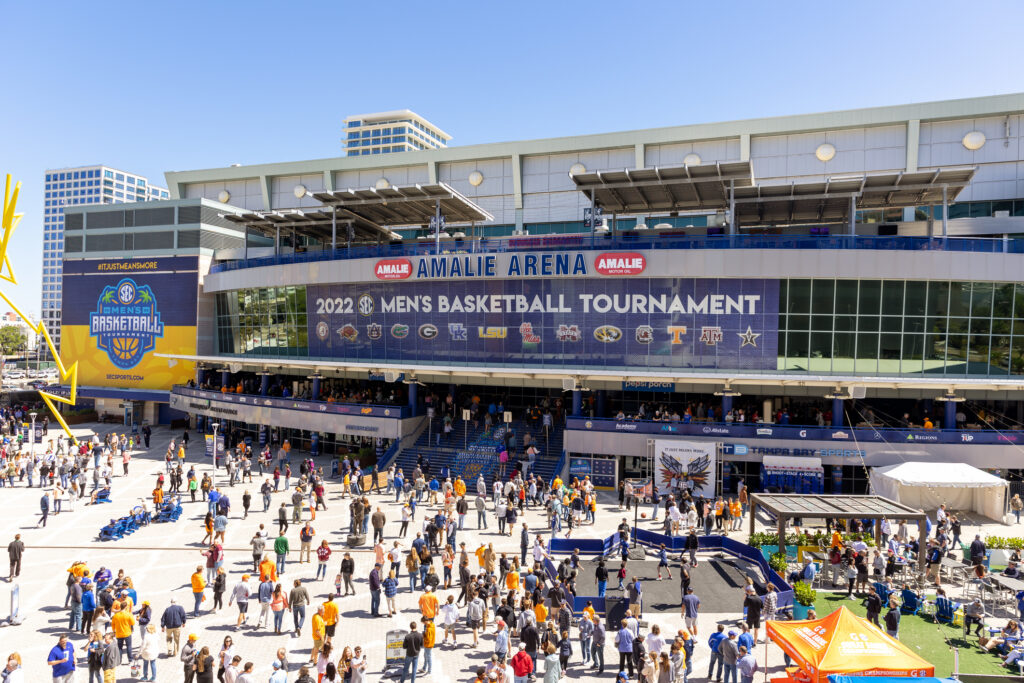
College basketball is played across five different levels of competition: NCAA D1, D2, D3, NAIA, and JUCO—with thousands of programs spread across the country.
Each level (except NCAA D3) has its own scholarship opportunities, its own recruiting culture, and its own version of what being a college basketball player entails.
Just how competitive is college basketball recruiting?
According to the National Federation of State High School Athletic Associations, close to a million high school athletes play high school basketball in the U.S. every year. And every year, tens of thousands of basketball players continue their careers in college across Division I, Division II, Division III, NAIA, and JUCO programs.
But the truth is that most athletes who go on to play college basketball aren’t on the court during March Madness (or even the NIT)—they’ve found opportunities to play at different levels. There are many avenues to play basketball at the collegiate level—and it stays competitive across the spectrum.
A few things to keep in mind:
- Power 4 isn’t the only path. Most college basketball players won’t play at the Division I level. NCAA Division II, Division III, NAIA, and JUCO programs fill out the vast majority of the basketball landscape.
- The right level is the one that fits. Athletic ability, academic profile, financial aid, where you want to live—all of these shape which level is the right one for you.
- D1-or-bust is a recipe for unhappiness. A program where you start, contribute, and grow is almost always a better four years than attending a “bigger” program where you won’t see the floor.
- Coaches at every level have spots to fill. Whether it’s Duke or a regional D3 program in your backyard, coaches are recruiting athletes like you at every level, every year.
- Men’s and women’s recruiting diverge most at D1. Below D1, the structures and rules line up closely between men’s and women’s basketball. The level-by-level breakdowns below flag the differences where they matter most.
Yes, college ball is a competitive prospect—but it’s absolutely doable! The athletes who crack that code are the ones who find their niche and don’t chase levels or programs.
NCAA Division I
If you play basketball, then you know D1 hoops. The storied programs, the legendary coaches, and, of course, March Madness—this level is the biggest stage there is. It’s also unbelievably demanding. D1 is literally eat, sleep, breathe basketball; these athletes are working a full-time job on top of their studies.
Within the context of NCAA Division I basketball, there are three tiers:
High-major. These are the Power 4 conferences (ACC, Big Ten, Big 12, SEC) plus the Big East. Think national coverage, top-tier facilities and coaching staff, and the most competitive recruiting in college basketball. Roughly the top 75 programs.
Mid-major. The Atlantic 10, Mountain West, American, West Coast Conference, Missouri Valley, and others. Extremely good basketball, strong recruiting, and programs that send teams to the NCAA Tournament every year and develop pros.
Low-major. Smaller D1 conferences with regional reach. Conference USA, MAAC, Patriot League, Southland, others. D1 basketball with smaller budgets but serious competition.
A few things to know about D1:
- Program counts. There are roughly 360 Division I basketball programs for both men’s and women’s.
- Roster size and scholarships. There are 15 roster spots, all eligible for full scholarship. Most non-Power 4 programs aren’t fully funded to the cap—which means partial athletic aid stacks with academic and need-based aid. More on scholarships here.
- Year-round commitment. D1 basketball is a year-round job. Early-morning lifts, film sessions, practice, travel, conditioning—the schedule is built around basketball with academics layered on top. Daily commitment continues through the offseason.
- Recruiting starts early. Coaches are watching seventh and eighth graders at AAU events. By the time NCAA contact rules let them call you on June 15 after sophomore year, evaluation has typically been going on for years.
Men’s and women’s D1 share the same NCAA structure but operate differently in practice. International recruiting has grown across men’s D1, especially at high-major programs. High school film tends to weigh more heavily at some women’s programs than at most men’s—a pattern that extends down through D2 and the levels below.
The D1 recruiting funnel is intense at every tier. If D1 is your target, the work has to match the level—and so does the honest assessment of which D1 tier fits.
NCAA Division II
D2 basketball’s skill level is exceptional, it’s well-funded, and more balanced in terms of student life than Division I. The athletes at this level are immensely talented players who picked schools where the academic, geographic, or financial fit made the most sense based on their goals.
Things to know:
- Scholarships. 10 maximum full scholarships for both men’s and women’s D2 basketball. Athletic aid splits across the roster as partial scholarships, often combined with academic and need-based aid.
- Program counts. There are roughly 300 men’s D2 programs and 315 women’s D2 programs.
- The recruiting timeline differs from D1. Coaches at this level often build relationships with athletes through junior and senior year, with offers coming together as their depth chart picture clarifies.
- Admissions matters. Below the high-major tier, recruiting starts to function as a partnership between coach and admissions office. Your academics matter as much as your basketball.
NCAA Division III
D3 is the largest division in NCAA basketball by program count. There are hundreds of schools, spread across every section of the country, with extraordinary variety in academic programs, fields of study, and level of competition. Division III gives athletes an incredible opportunity to tailor their college experience.
Things to know:
- No athletic scholarships. D3 schools don’t award athletic aid. Financial aid comes from academic merit and need-based sources, both of which can be substantial at the right school.
- Program counts. About 420 men’s D3 programs and 430 women’s D3 programs.
- The academic experience is the center. D3 schools tend to emphasize academics, smaller class sizes, and the traditional college experience. Athletes are always students first.
- Recruiting is admissions-driven. D3 coaches advocate for athletes through admissions but can’t promise spots. Your application has to clear the school’s standards. That makes academic fit part of the recruiting conversation from day one.
- Same setup on both sides. Men’s and women’s D3 operate on the same financial structure and the same admissions-driven recruiting culture. Women’s D3 has slightly more programs; otherwise the recruiting experience tracks closely across both.
NAIA
The National Association of Intercollegiate Athletics, known as the NAIA, is a separate governing body of college sports—it’s completely unaffiliated with the NCAA. The athletic experience at most NAIA programs is comparable to NCAA D2 or D3, with smaller campuses, class sizes, and less restrictive recruiting regulations.
Things to know:
- Athletic scholarships. NAIA programs offer athletic aid, with funding levels that vary by school. Many programs combine both athletic and academic aid for a stronger overall package.
- Program counts. There are roughly 235 NAIA college basketball programs for both men’s and women’s.
- Smaller schools, tighter community. NAIA programs are typically at private liberal arts colleges, religiously affiliated schools, or smaller public institutions. Tight-knit campus, smaller classes, and a strong focus on the student-athlete experience.
- Recruiting flexibility. NAIA recruiting rules are looser than the NCAA’s. Coaches can communicate with athletes earlier and more directly. Relationships often build faster.
- Men’s and women’s are similar journeys. NAIA men’s and women’s basketball follow the same playbook—similar athletic aid math, comparable program counts, the same recruiting flexibility.
For athletes who want competitive basketball at a smaller school with athletic aid on the table, NAIA is a real option that doesn’t get enough attention.
JUCO
Junior college basketball, organized through the NJCAA, is a two-year springboard that sends athletes to four-year programs across every division. Some of the best stories in college basketball start with a JUCO season.
Things to know:
- Athletic aid varies by JUCO division. NJCAA D1 programs can offer full athletic scholarships. NJCAA D2 offers partial. NJCAA D3 doesn’t offer athletic aid.
- Program counts. Around 500+ NJCAA basketball programs across both men’s and women’s sides.
- Time to develop. Two years at the JUCO level can grow your game, improve your athleticism, elevate your GPA, or all three. Athletes leave JUCO better basketball players than they arrived.
- Direct pipelines. Many JUCO programs have established relationships with four-year programs across the country. JUCO transfers fill D1, D2, NAIA, and overseas rosters every year.
- Men’s and women’s JUCO work the same way. Same NJCAA division structure, same scholarship math at each NJCAA level, comparable program counts.
For athletes who need time to develop, aren’t ready for a four-year commitment out of high school, or want to upgrade their level after they grow, JUCO is a legitimate path forward.
Final thoughts: College basketball isn’t one level—it’s five, with thousands of programs spread across them. The athletes who find the most fulfilling four years are the ones who evaluate the full landscape, get honest about where they fit, and commit to the level where they’ll actually play. Logos and division numbers matter less than people think. Where you’ll thrive matters more.